

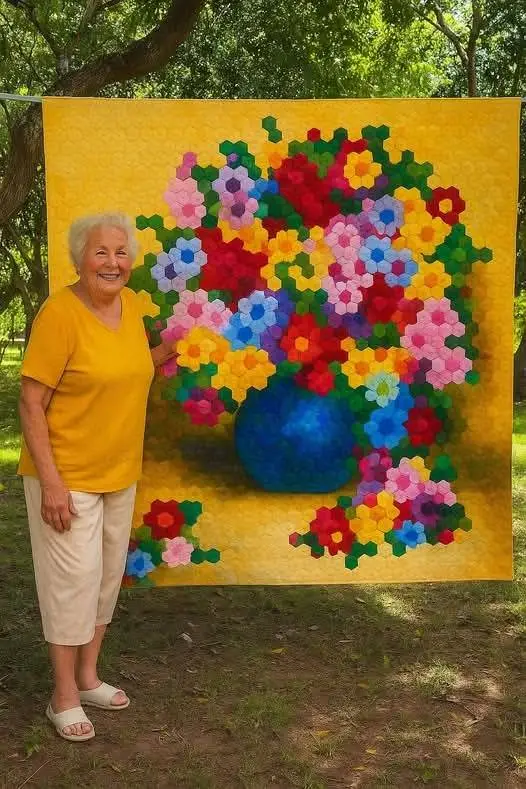
The hexagon flower quilt is a true work of art in fabric. Inspired by floral arrangements, it combines vibrant colors, visual depth, and a classic patchwork technique: English Paper Piecing (EPP). The result is a quilt full of movement, perfect for use as a decorative accent or displayed as a panel.
In this tutorial, you will learn step-by-step how to create a quilt similar to the one in the image, with colorful flowers forming a large bouquet in a vase.
Materials Needed:
• 100% cotton fabrics in various colors:
– Vibrant shades for the flowers (red, pink, blue, yellow, lilac)
– Various greens for the leaves
– Blue or dark shades for the vase
– Yellow or a warm shade for the background
• Paper hexagon templates (all the same size)
• Fine thread for hand sewing
• Hand sewing needle
• Scissors
• Iron
• Fabric for the back of the quilt
• Acrylic batting
• Pins
• Sewing machine (for assembly and quilting)
Hexagon Size
For this type of artwork, it is recommended:
• Hexagons with sides between 2.5 cm and 4 cm
The smaller the hexagon, the more detailed the design will be.

Step-by-Step:
1. Design Planning
Before you start sewing, draw the design:
• Sketch the general shape of the bouquet
• Define where the vase will be placed
• Mentally distribute the colors of the flowers and leaves
An important tip is to assemble the design little by little on a wall or large table, positioning the hexagons as the composition grows.
2. Hexagon Preparation (EPP)
1. Cut the fabrics leaving a margin around the paper template.
2. Position the paper on the wrong side of the fabric.
3. Fold the edges of the fabric over the paper and baste.
4. Repeat the process for all hexagons.
This method ensures precision and a perfect fit of the pieces.
3. Flower Assembly
• Each flower can be formed by a central hexagon and others around it.
• Mix similar tones to create depth and movement.
• Avoid very repetitive patterns to maintain the natural look of the arrangement. 1. Hand-sew the hexagons together, joining them side by side with invisible stitches.
2. Vase Construction
Use shades of blue or solid colors to create contrast with the flowers.
• The vase can be rounded, wider at the base and narrower at the top.
• Work with color gradations to give a volume effect.
3. Filling the Background
After finishing the bouquet:
• Fill the entire perimeter with background hexagons (yellow or warm tones).
• This helps to highlight the flowers and creates a natural frame.
4. Removing the Papers
When the top is completely assembled:
• Carefully remove the paper templates from the hexagons.
• Iron the piece at medium temperature.
7. Quilt Assembly
Assemble the traditional “sandwich”:
1. Backing fabric (right side down)
2. Acrylic batting
3. Quilt top (right side up)
Pin well before sewing.
8. Quilting
To enhance the design:
• Use subtle quilting in the background
• Highlight flowers and vase with contour lines (highlight quilting)
Free-motion machine quilting works very well in this style.
9. Finishing
Finish with bias tape in a neutral color or one that matches the background, keeping the focus on the bouquet.
Important Tips:
• Work in stages: this type of quilt is a medium- to long-term project.
• Use good lighting to avoid eye strain.
• Photograph the progress — it’s motivating and makes for great blog content!
• This technique is perfect for reusing small scraps of fabric.
Final Considerations
The hexagonal flower quilt is more than just a handcrafted item: it’s an artistic expression. Each flower, each color, and each stitch tells a story. The end result is a unique piece, full of emotion and personality.